
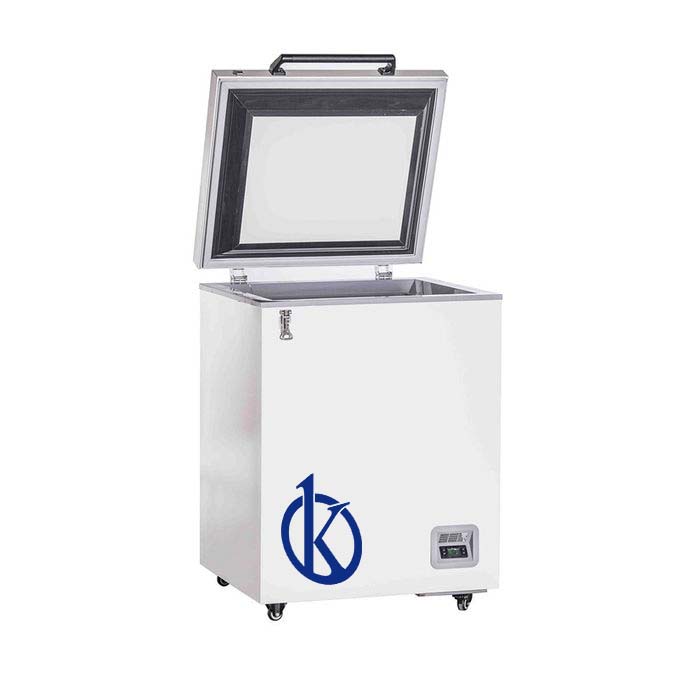
When it comes to preserving scientific samples, ensuring optimal conditions is crucial. In this context, biomedical freezers play a monumental role. Two noteworthy models are the 105L Biomedical Chest Freezer Open Top YR05316 from Kalstein and the Ultra-Low Temperature Freezer MDF-U731M by PHCbi. Both are excellent in their categories, but each possesses unique characteristics that cater to different segments of the scientific community.
The 105L Biomedical Chest Freezer Open Top YR05316, offered by Kalstein, stands out due to its blend of innovation and design. This model is developed with an open-top chest design, ideal for laboratories that require efficient use of space and a large storage capacity. Its temperature range allows it to maintain exceptionally low temperatures, providing an optimal environment for the long-term preservation of sensitive samples. Meanwhile, the Ultra-Low Temperature Freezer MDF-U731M from PHCbi is recognized for its robust performance in ultra-low temperature applications, maintaining temperatures as low as -86°C. It is designed to offer reliability and consistent performance, essential for laboratories handling critical storage tasks.
| Feature | Kalstein 105L Biomedical Chest Freezer | PHCbi Ultra-Low Temperature Freezer |
|---|---|---|
| Design | Open Top Chest | Upright |
| Temperature Range | -40°C | -86°C |
| Capacity | 105L | Large |
| Energy Efficiency | High | Moderate |
| User Interface | Digital Control | Touch Screen |
| Price | Competitive | Premium |
How They Work
The 105L Biomedical Chest Freezer Open Top YR05316 operates by utilizing an advanced refrigeration system designed to achieve low energy consumption while maintaining precise temperature control. Its open-top design aids in minimizing energy loss during access, enhancing efficiency. On the other hand, the PHCbi model employs a dual cooling system that ensures a stable ultra-low temperature environment, crucial for maintaining the integrity of samples requiring such extreme conditions.
Purpose
Both freezers serve the purpose of safeguarding sensitive samples; however, their applications differ slightly. The Kalstein 105L model is perfect for laboratories focusing on research areas where moderate low temperatures are sufficient, such as in the storage of reagents or pharmaceutical samples. Meanwhile, the PHCbi ultra-low temperature freezer fits scenarios where sub-zero preservation is non-negotiable, such as in cryogenics or certain clinical trials.
Types
The Kalstein 105L Biomedical Chest Freezer excels as a space-efficient model ideal for specific lab setups due to its horizontal configuration. The PHCbi alternative, with its upright design, offers easy access and organization, catering to facilities with multiple samples that need to be frequently accessed.
Market Price
In the competitive world of biomedical refrigeration, prices can vary widely based on features, capacity, and technology. The Kalstein 105L model is available at a competitive price point, making it accessible for a range of laboratories and institutions. In contrast, the PHCbi model is positioned at a premium price range, reflecting its advanced ultra-low temperature capabilities.
Frequently Asked Questions
What is the energy consumption for each freezer?
The Kalstein 105L Biomedical Chest Freezer is highly energy-efficient, designed to minimize consumption while maximizing performance. The PHCbi model, with its dual cooling systems, uses more energy due to its ultra-low temperature requirements.
Which freezer is better for small laboratories?
The Kalstein 105L model is a preferable choice for small laboratories, offering a cost-effective and space-efficient solution without compromising on performance.
Advantages and Disadvantages
Kalstein 105L Biomedical Chest Freezer
- Advantages: Energy-efficient, space-saving design, competitive pricing.
- Disadvantages: Limited to -40°C, which may not suffice for all ultra-low preservation needs.
PHCbi Ultra-Low Temperature Freezer
- Advantages: Ultra-low temperature capabilities, robust construction.
- Disadvantages: High energy consumption, higher cost.
Product Usage in the Field
The Kalstein 105L model is widely used in pharmaceutical labs for the storage of temperature-sensitive compounds such as vaccines and reagents. Its ergonomic design makes it suitable for busy environments. The PHCbi model finds its niche in research institutions where maintaining extremely low temperatures is crucial, such as in the storage of biological samples for genetic studies.
Recommendations
For optimal use of the Kalstein 105L Biomedical Chest Freezer, it is recommended to regularly check and maintain the seals to ensure efficient temperature retention. Employing a temperature monitoring system can further enhance performance by providing real-time alerts in case of fluctuations. Regular servicing of the PHCbi freezer is vital to maintain its ultra-low temperature capacity and extend its lifespan.
If you’re looking for a fusion of innovation and quality, you’ve come to the right place. At Kalstein, we offer you the luxury of exploring our exclusive catalog of laboratory equipment. We manufacture each piece of equipment with a level of excellence. Our intuitive and agile online purchasing channels are designed for your convenience, ensuring the most friendly prices. Don’t hesitate any longer, we bring science to life, it’s time to become part of our community. https://kalstein.pl/product/105l-biomedical-chest-freezer-open-top-yr05316/.